
See how Vyrill unlocks insights from your videos. Book A Demo


See how Vyrill unlocks insights from your videos. Book A Demo

UGC Video Content Strategy: How to Map the Right Video to Every Stage of the Buyer Journey
April 2, 2026
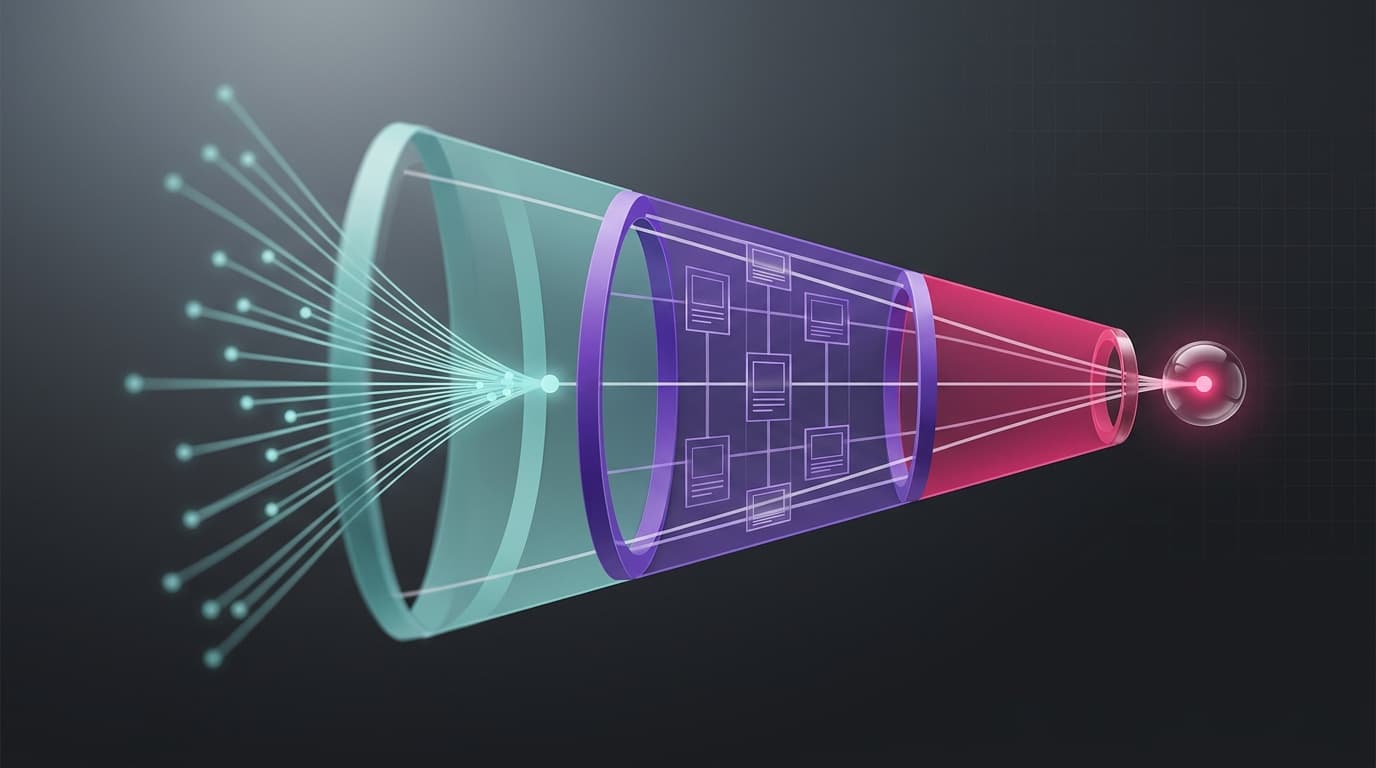
The "Funnel Mismatch Problem" is quietly draining revenue from e-commerce brands across the globe. Most modern marketing teams have successfully amassed a vast library of consumer-generated video content, but almost none deploy it strategically. Instead of a targeted approach, brands treat their video assets like a blunt instrument, accidentally showing the wrong video to the wrong buyer at the wrong moment. When a top-of-funnel buyer sees a hyper-specific technical review, or a bottom-of-funnel buyer sees a generic unboxing, friction is introduced, and conversions are left on the table.
What UGC videos should you show at each stage of the buyer journey? To maximize conversions, brands must map authentic lifestyle and unboxing videos to the Awareness stage, detailed review and tutorial videos to the Consideration stage, and urgency-driven testimonial or before-and-after videos to the Conversion stage. Aligning the specific type of user-generated video content with the buyer's psychological mindset ensures the right message is delivered at the exact moment of decision-making.
The stakes for getting this right are incredibly high. According to recent data, 91% of businesses use video as a marketing tool, and 93% report strong ROI. However, achieving that return requires more than simply embedding a video on a homepage. It requires a sophisticated understanding of how shoppers use videos throughout their purchase journey. By implementing a stage-specific approach, marketing leaders can unlock the proven ROI of user-generated video content and transform passive viewers into confident buyers.
Why the Right Video at the Right Time Matters
Delivering the right video at the right time matters because a buyer's psychological needs shift dramatically from initial discovery to final purchase. A successful UGC video content strategy recognizes that "using more video" is not a strategy; it is merely a tactic. True strategic alignment requires mapping the emotional and informational needs of the consumer to the specific format, tone, and content of the video they are watching.
Consider the psychological state of the buyer as they move through the funnel. In the initial stages, they are often unaware of their specific problem or the available solutions. They are seeking inspiration, entertainment, or broad education. If you present them with a dense, ten-minute video comparing the technical specifications of your product against a competitor, you will overwhelm them and lose their attention. Conversely, when a buyer is hovering over the "Add to Cart" button, they do not need a high-level brand introduction; they need peer validation that the product works exactly as promised.
This is the foundation of the Video-First Buyer Journey Framework. By categorizing your video content for e-commerce into distinct psychological buckets, you can architect a seamless path to purchase. This approach is supported by Think With Google consumer insights, which reveal that shoppers actively pivot their video research behavior based on how close they are to making a purchase decision. To capitalize on this behavior, marketing leaders must audit their existing video libraries and ruthlessly categorize assets by funnel stage.
In the Awareness stage, the primary goal of your UGC video content strategy is to build immediate trust and emotional resonance before commercial intent fully forms. At this point in the journey, the consumer is likely scrolling through a feed, reading a top-of-funnel blog post, or encountering a social ad. They are not actively looking to buy your product; they are looking to be engaged.
The types of user-generated video content that excel here are unboxing hauls, lifestyle UGC, brand discovery videos, and broad social proof stories. These formats work because they prioritize authenticity over production value. A polished, studio-quality commercial signals to the brain that it is being sold to, which immediately raises the consumer's defensive barriers. A raw, authentic video of a real person discovering your brand for the first time bypasses those defenses. It feels like a recommendation from a friend rather than a pitch from a corporation.

To execute this effectively, CMOs and marketing directors must deploy these videos in high-visibility, low-friction environments. Tactical placements include:
- Top-of-Funnel Landing Pages: Embed lifestyle UGC to instantly communicate the brand's vibe and community.
- Social Prospecting Ads: Use fast-paced unboxing videos to capture attention within the first three seconds of a scroll.
- Blog Embeds: Integrate brand discovery videos into educational content to gently introduce the product as a natural solution to the reader's broader problem.
The key message for the Awareness stage is simple: educate and inspire. Do not ask for the sale yet. Focus entirely on capturing attention and establishing a baseline of authentic trust.
Consideration Stage: Answer "Is This Right for Me?"
During the Consideration stage, buyers actively evaluate their options, meaning your video content must directly answer their specific questions and remove lingering objections. The buyer now knows they have a problem, and they know your brand offers a potential solution. However, they are also looking at your competitors. Their primary internal monologue is, "Will this specific product work for my unique situation?"
To help the buyer self-qualify, your UGC video content strategy must shift from broad inspiration to granular education. The most effective video formats for this stage include in-depth product reviews, side-by-side comparison videos, "how-I-use-this" tutorials, and community Q&A content. These videos should feature real customers demonstrating the product in real-world scenarios, highlighting both the benefits and the practical realities of using it.

Strategically placing these videos is critical for maintaining momentum in the buyer journey. They belong on Product Detail Pages (PDPs), category pages, and within email nurture sequences. When a shopper lands on a category page, a well-placed comparison video can help them narrow down their choices. When they click through to a PDP, a detailed tutorial video can answer technical questions that text descriptions often fail to convey.
Furthermore, integrating these detailed videos into your site architecture is highly beneficial for organic discovery. Understanding how UGC video strengthens your SEO strategy is vital, as search engines increasingly prioritize rich, multimedia experiences that keep users engaged on the page longer. As you scale this approach, you will quickly realize that manually matching these specific videos to individual buyer personas is nearly impossible, which is exactly how AI enhances video personalization in e-commerce, ensuring the right tutorial reaches the right evaluating buyer.
Conversion Stage: Close the Sale with Confidence
At the Conversion stage, the objective of your video content is to eliminate final hesitations and create the urgency needed to close the sale. The buyer has done their research, compared the alternatives, and added the item to their cart. Yet, cart abandonment rates remain notoriously high across the e-commerce sector. The culprit is almost always a last-minute spike in purchase anxiety.
To combat this, your UGC video content strategy must deploy highly specific, conversion-focused assets. The best formats for this stage are before-and-after transformation videos, "why I finally bought it" testimonials, and urgency-driven UGC (such as videos of customers talking about how quickly the item sells out). These videos do not need to explain how the product works; they need to validate that buying it right now is the correct decision.
According to the 2025 Edelman Trust Barometer, consumers overwhelmingly rely on peer-driven proof over corporate messaging when making final financial commitments. A raw video of a customer expressing genuine relief or excitement after purchasing acts as the ultimate digital trust signal.

Tactical placements for Conversion stage videos must be precise and unobtrusive. They should be embedded directly on cart pages, integrated into checkout flows, utilized in aggressive retargeting ad campaigns, and featured prominently in abandoned cart email sequences. A short, looping video of a successful customer transformation placed right next to the checkout button can be the exact psychological nudge required to push a hesitant buyer over the finish line.
The Video-First Buyer Journey Framework
To operationalize this strategy, marketing teams need a clear, scannable matrix. The proprietary framework below maps the exact relationship between the buyer's psychological state and the optimal video deployment strategy. Use this table to audit your current video marketing strategies and identify critical gaps in your funnel.
| Buyer Journey Stage | Buyer Mindset | Best UGC Video Types | Recommended Placement | Primary Goal |
|---|---|---|---|---|
| Awareness | "I'm looking for inspiration or trying to solve a broad problem." | Unboxing hauls, lifestyle UGC, brand discovery, social proof stories | Social ads, top-of-funnel landing pages, blog embeds | Build trust, educate, and create emotional resonance. |
| Consideration | "Is this specific product the right choice for my unique needs?" | In-depth reviews, comparisons, "how-to" tutorials, Q&A videos | Product Detail Pages (PDPs), category pages, email nurture sequences | Remove objections, answer questions, and help the buyer self-qualify. |
| Conversion | "I want this, but I need to be sure before I spend my money." | Before/after transformations, final testimonials, urgency-driven UGC | Cart pages, checkout flows, retargeting ads, abandoned cart emails | Eliminate final hesitation, create urgency, and confirm the decision. |
By adhering to this framework, brands can ensure that every piece of user-generated video content serves a distinct, measurable purpose, effectively guiding the consumer from initial curiosity to finalized purchase.
The AI Advantage: Discover and Deploy the Right Video at Scale
Leveraging artificial intelligence is the only sustainable way to discover, analyze, and deploy the right user-generated video content at scale across the entire buyer journey. While the framework outlined above is conceptually sound, executing it manually is a logistical nightmare. For a mid-market or enterprise e-commerce brand, manually sorting through hundreds or thousands of consumer video reviews to find the perfect "Consideration stage" tutorial is impossible.
This is where the traditional approach to video content for e-commerce breaks down. Marketing teams spend countless hours watching videos, tagging them in spreadsheets, and trying to secure licensing rights via direct messages. By the time a video is ready to be deployed to a PDP, the trend has passed, or the product is out of stock. Brands need a system that can instantly surface the right video by relevance, sentiment, topic, and funnel stage.
This is exactly why Vyrill was built. As an AI-powered "in-video" search, discovery, and commerce platform, Vyrill eliminates the manual bottleneck of UGC management. Instead of relying on human tagging, Vyrill's proprietary AI actually "watches" and "listens" to the videos, analyzing spoken words, on-screen text, and visual context. It automatically categorizes content, allowing a CMO or Head of Ecommerce to instantly pull up all positive, high-quality unboxing videos for the Awareness stage, or highly detailed tutorial videos for the Consideration stage.
Furthermore, Vyrill provides an all-in-one solution that goes beyond mere discovery. It allows brands to seamlessly analyze sentiment, legally license the best UGC economically, and deploy it directly to the exact pages where it will have the highest impact. By automating the heavy lifting, Vyrill empowers marketing teams to unlock the full spectrum of UGC benefits without adding headcount or increasing agency retainers.
Measuring What Works: KPIs by Funnel Stage
To prove the ROI of your video marketing strategies, you must track specific Key Performance Indicators (KPIs) that align with the unique goals of each funnel stage. A common mistake marketing leaders make is judging all video content by a single metric, such as total views. However, a million views on a Conversion stage video is irrelevant if it doesn't drive sales, just as a low view count on a highly technical Consideration video is acceptable if it boasts a 90% completion rate among qualified buyers.
To accurately measure your UGC video content strategy, segment your analytics:
- Awareness KPIs: Focus on top-of-funnel engagement. Track video view rate, total reach, brand recall lift, and social engagement (shares and comments). The goal is to measure how effectively the video captures and holds initial attention.
- Consideration KPIs: Focus on depth of engagement and site behavior. Track time on page, bounce rate reduction on PDPs, email click-through rates (CTR) for nurture sequences, and video completion rates. These metrics indicate that the buyer is actively evaluating the information.
- Conversion KPIs: Focus strictly on revenue-driving actions. Track add-to-cart rate, checkout completion rate, overall conversion rate uplift (comparing pages with video vs. without), and revenue per visitor.
By utilizing the advanced reporting features within platforms like Vyrill, marketing leaders can move away from vanity metrics and directly tie their video deployments to bottom-line revenue growth.
Stop Guessing, Start Converting
A successful UGC video content strategy requires more than just a large library of customer videos; it requires precision. By mapping authentic unboxing videos to the Awareness stage, detailed tutorials to the Consideration stage, and powerful testimonials to the Conversion stage, you can guide your buyers seamlessly from discovery to purchase. However, executing this at scale requires intelligent automation.
Ready to stop guessing which video goes where and start maximizing your e-commerce ROI? Vyrill can help you discover, analyze, and deploy the perfect video for every stage of the buyer journey. Discover the power of AI-driven video commerce today.